How far should YOU go?
What would be the ideal combination of automated and non-automated processes in YOUR warehousing operation? Today, we delve into the topic of ‘optimal automation’.
For some businesses, introducing just one relatively simple automated feature, such as a conveyor, is enough. Others may benefit from a fully automated warehouse. In most cases, the optimum solution lies somewhere in between.
Automated warehouse choices
Warehouse automation is a very wide subject. In our Eureka library, you’ll find articles summarising issues and developments in each area.
Take conveyors, for instance. We have advice on how they can boost warehouse efficiency, and what needs to be considered.
One automated aid which is now surprisingly easy to introduce is an inventory drone. Using the system we describe, there’s no need for an operator to navigate. The drone is programmed with all the information it needs. You simply set it off and it scans the area chosen. It can scan up to 500 pallet positions in an hour. This compares with about 60 positions per hour in traditional stocktaking. What’s more, it gives much more accurate results.
This leads us to the topic of warehouse management systems (WMS). These must be fed with accurate inventory data if they are to work effectively. They range from basic spreadsheets to automated systems with sophisticated software. It’s important to choose a level of sophistication and automation that’s right for your business. Our WMS article offers guidance on that.
Matching the numbers and skills of your warehouse staff to each day’s varying workload is a major challenge. Labour management software (LMS) is an automated tool that may help here. We’ve looked at how this technology is developing.
Both WMS and LMS solutions can benefit from the application of machine learning and artificial intelligence (AI). AI-based systems may be used, for instance, to predict future demand, optimise inventory levels and anticipate supply chain disruptions. Our article on AI looks at the many ways in which this technology supports warehousing and logistics.
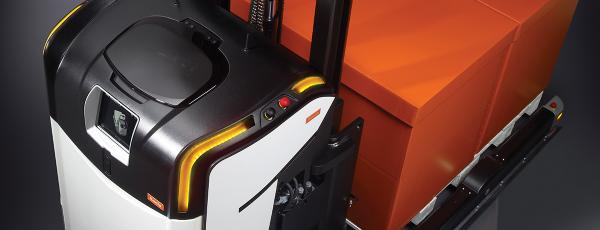
We have articles on driverless vehicles (DVs) and automated guided vehicles (AGVs). DVs, such as driverless taxis, are highly autonomous. In other words, they make many decisions for themselves. AGVs are more limited in that respect, although their ability to self-navigate is growing. While confident deployment of DVs on roads could still be some years away, they have more immediate potential for carrying goods in controlled warehouse environments.
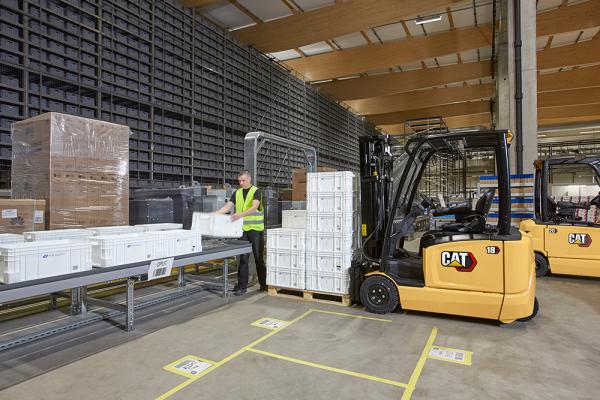
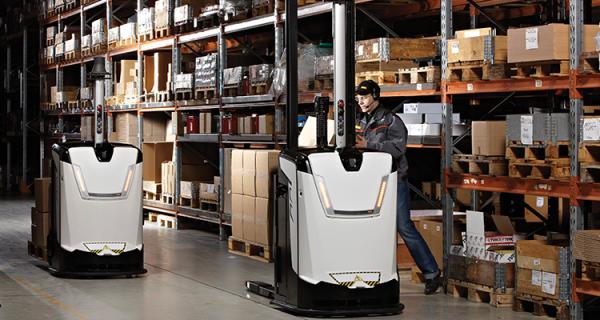
In materials handling operations, optimal automation is often about a mix of AGVs and operator-driven lift trucks. Advances in AGV control and software mean they can even work in the same area at the same time. AGVs make most sense for repetitive tasks; drivers are needed for more varied and unpredictable situations.
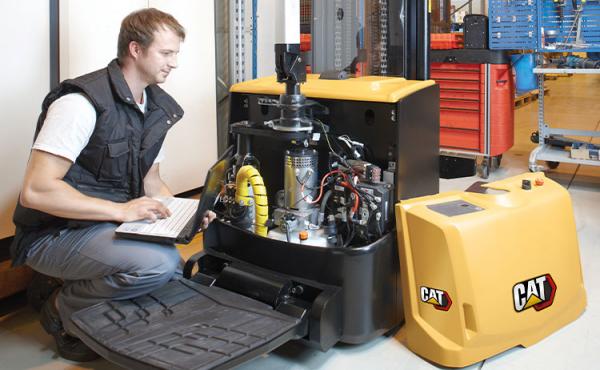
It’s worth mentioning that fleet management of both AGVs and conventional forklifts can benefit from automation. Our article on telematics is about automatic monitoring of the trucks, their activities and their condition.
Elsewhere, we chart developments in exoskeletons and robotics for materials handling. In another update on warehouse automation, we look at simpler robotic applications such as palletisation. Our advice extends to supply chain automation.
Why not automate your warehouse?
With so much potential for increased productivity, efficiency and profit, what’s stopping businesses from automating?
We asked Pekka Paavilainen, Intralogistics Specialist at LNE Group.
“Flexibility is one issue raised. In some cases, there’s a genuine need to maximise flexibility in all processes. For instance, a warehouse may be catering for multiple small clients, each with very different process needs. More often, however, businesses have a false belief that they can’t set rule-based policies which would allow the same steps to be repeated in the same way every day. Automation is always based on doing things repetitively. This leads to greater efficiency and traceability, and as a side effect it makes training of new staff members easier.”
Pekka notes that warehouses with extremely limited space may be difficult to automate.
“Automation needs dedicated spaces for each function and process. Consider, for example, a small warehouse in which the same lanes are used for inbound and outbound goods. Or where processes must adapt constantly to make maximum use of the available floor area. These factors make it hard to apply structured, rule-based automation.”
Do driver-operated lift trucks have a future?
Based on his expertise in combining AGVs optimally with conventional forklifts, Pekka believes there will always be a need for drivers.
“Automated solutions are at their best with repeated tasks, but in many other situations human judgement is needed. AI may eventually help with this, but a driver’s experience and flexibility are highly valuable. Humans also have the advantage in businesses where the driver does a little bit of everything, taking into account all that’s happening around. Again, flexibility is the key. The bigger the operation, the easier it is to create rules for automation, but in small, agile, somewhat ad-hoc operations, the human will be king for a long time to come.”
For further practical guidance on a wide range of topics relevant to materials handling, warehousing and logistics: