Rapid e-commerce growth is transforming the retail landscape. It’s no longer a steady and predictable supply chain moving full pallets from manufacturers to stores.
In recent years, it’s evolved into a complex and dynamic high-speed ecosystem, driven by order fulfilment, same-day delivery expectations and massive SKU proliferation.
Getting ahead in such a challenging environment forces e-commerce businesses – and their 3PL and warehousing partners – to rethink everything.
And that certainly includes its materials handling: from lifting and moving operations to the design and engineering of the forklifts themselves.
Forklifts and e-commerce
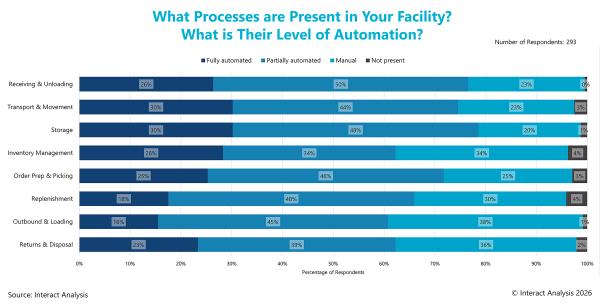
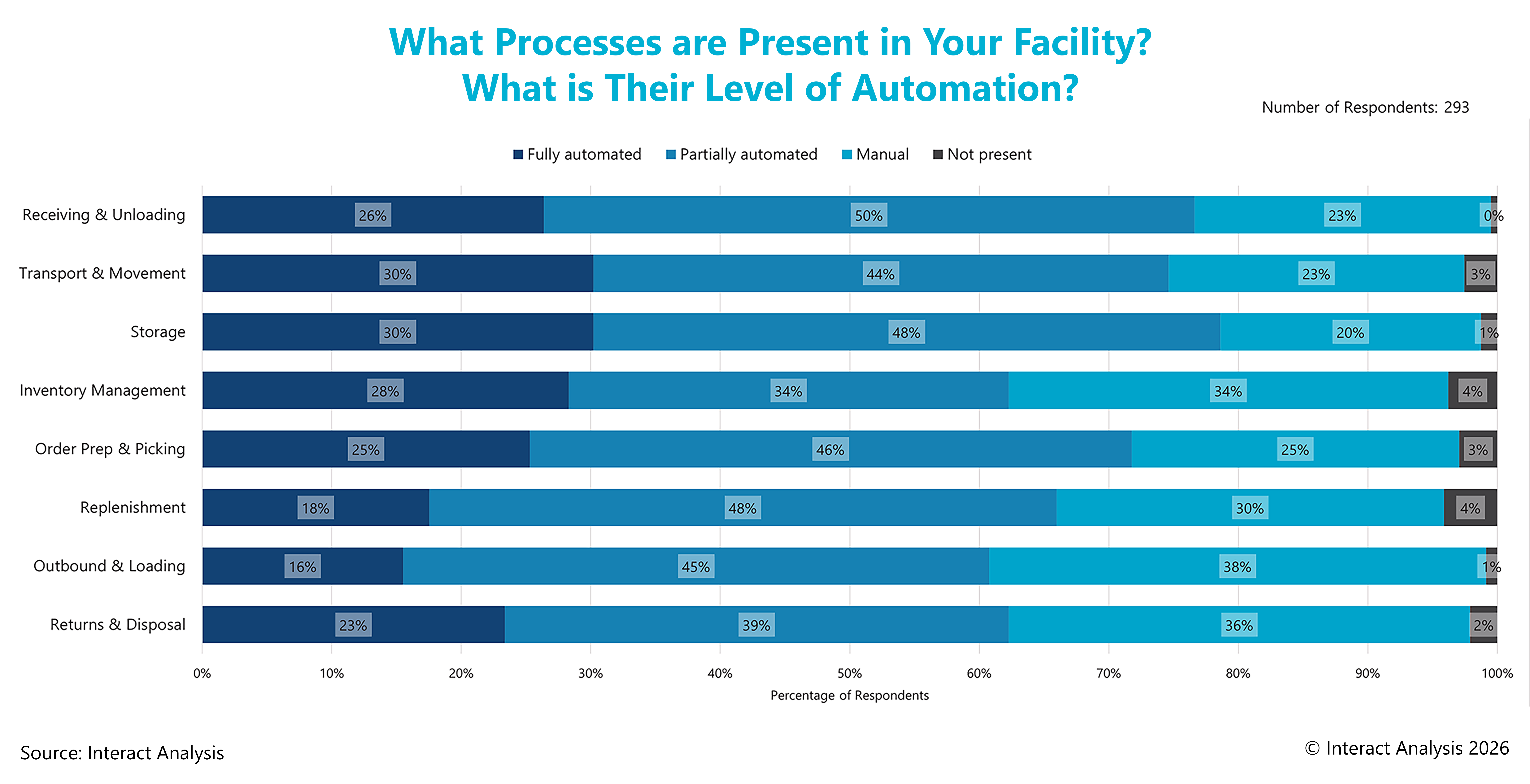
In May 2026, Interact Analysis Voice of Market survey asked 293 e-commerce decision-makers and influencers about the sector’s use of materials handling technology. The results are illustrated in the diagram below.
Key takeaways
Throughput rules the fulfilment floor
Order velocity has officially surpassed traditional operational metrics as the primary KPI, with order volumes and automation strategy trailing closely behind.
Materials handling as an operational bottleneck
Over a quarter (26.3%) of decision-makers cite lift trucks as a "top problem" technology, highlighting how rapid technological changes and heavy equipment utilisation are creating friction in modern warehouses.
The hybrid reality of modern logistics
Despite the rise in warehouse automation, manual lift truck and pallet-handling processes remain vital and irreplaceable for many facilities.
Findings like these are precisely why our team is committed to making sure Cat® lift trucks can meet our customer needs. Now and into the future.
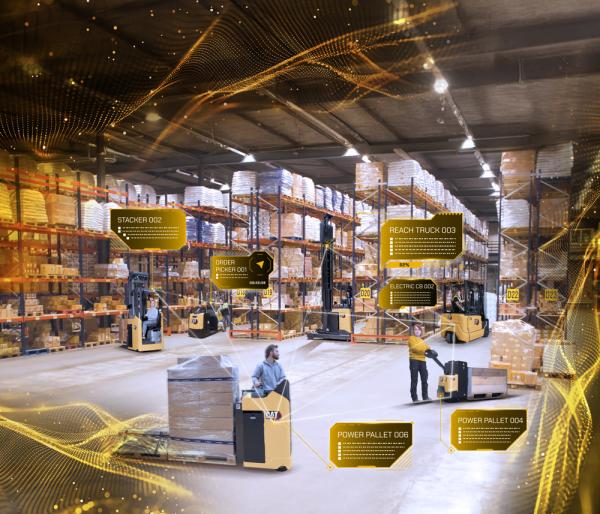
At present, we are helping our e-commerce, warehousing and third-party logistics (3PL) customers navigate several key challenges.
High-density picking environments
While traditional warehouses relied on standardised load units, uniform sequences and wide aisles, in modern warehousing facilities, fuller space utilisation is crucial.
Direct-to-consumer (D2C) models, for example, demand continuous, piece-level order picking. Achieving this requires the storage of significantly higher numbers of individual items within the same physical footprint.
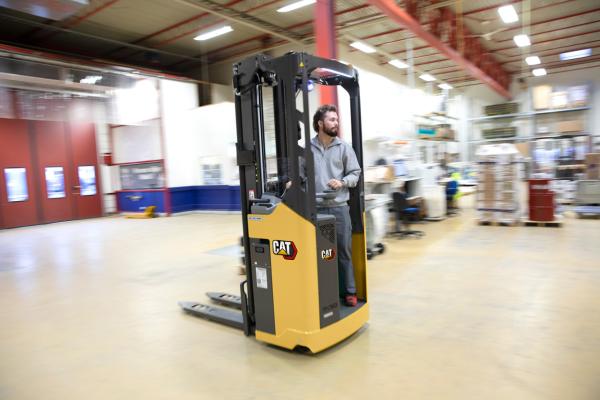
In response, fulfilment centres must expand vertically – narrowing aisles to maximise volume. This, in turn, has seen reliance on standard counterbalance trucks diminish in favour of specialised equipment, such as:
Stacker trucks
Our compact stand-in stackers and sit-on stackers, for example, lift higher than platform counterparts and succeed in narrower aisles. Specifying double-deep telescopic forks allows you to expand storage density by up to 50% without expanding your building footprint.
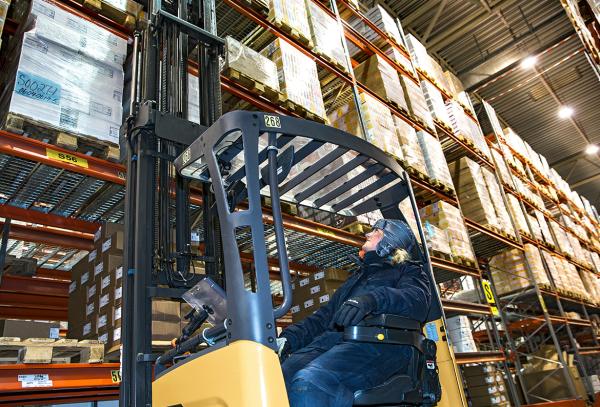
Reach trucks
High racking? Not a problem for our reach trucks. Our range handles lift heights up to 12.1 metres and capacities up to 2.5 tonnes.
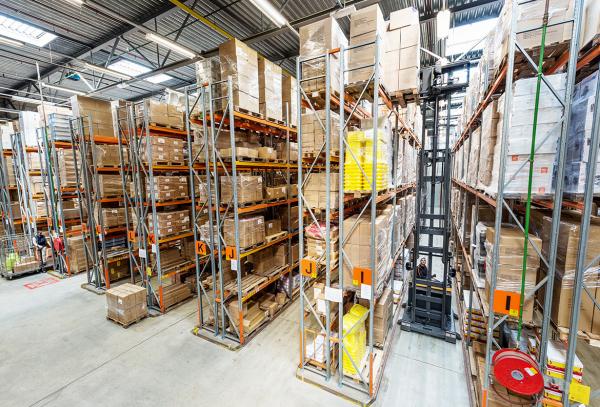
Very narrow aisle (VNA) trucks
Our range includes trucks specifically designed to meet the needs of very narrow aisle (VNA) racking systems. Every model is custom-built to the needs of your space, your load and your operator.
Our man-up turret trucks offer industry-leading lift heights (19.0 metres) and capacities (2.0 tonnes). Our man-down VNA trucks offer the best of both worlds: combining the efficiency of a turret truck with the freedom and versatility of a reach truck.
Speed, throughput and operational velocity
Turnaround times used to be measured in days. In e-commerce fulfilment, success is measured in hours or even minutes. This impacts workflow dynamics within the warehouse in several ways.
Instead of batch-moving products, equipment is in almost constant motion. Upon arrival, pallets are received rapidly, broken down and relocated to picking locations.
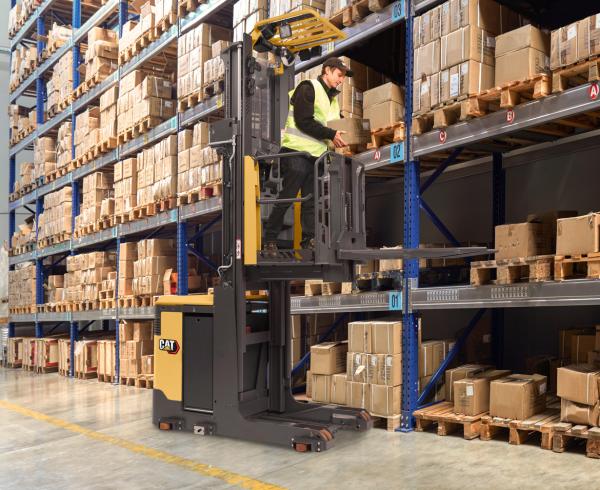
High-level order pickers, for example, elevate operators directly to storage locations to pick single items. Our high-level order pickers offer ultra-smooth mast operation, advanced stability controls and efficient picking at heights up to 12.1 metres.
Power, connectivity, and ergonomics
Maintaining e-commerce’s intense pace requires equipment geared towards operator efficiency, uptime and real-time connectivity. That’s why we innovate across the three key areas.
Lithium-ion technology
Lithium-ion (Li-ion) battery technology eliminates lead-acid batteries’ time and space constraints. Opportunity charging keeps 24/7 operations moving without any battery-swapping space or downtime necessary. Li-ion battery technology is optional across almost all Cat electric counterbalance and warehouse truck ranges.
Telematics and forklift digitalisation
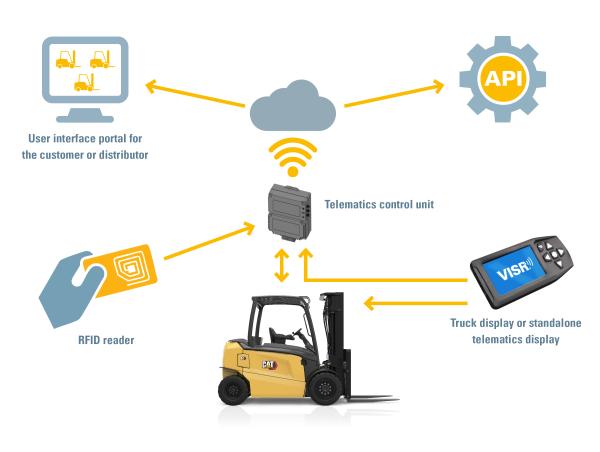
As we recently discussed, every modern forklift can now serve as a connected IoT data hub. Telematics platforms, such as VISR, our integrated solution, help facility managers track driver behaviour, optimise traffic routes, monitor battery health and much, much more. Data like this helps high-velocity fulfilment environment managers eliminate bottlenecks, prevent impacts and right-size their fleets.
Ergonomics and operator retention
The final piece of the puzzle is your operators. They play a crucial role in maximising performance. That’s why our designers prioritise their operator comfort and safety. Indeed, Cat® Lift Trucks is a leader in the field of ‘user experience’. You can learn more about that in the following article: how a forklift makes its driver feel.
For further practical guidance on a wide range of topics relevant to materials handling, warehousing and logistics:
- Search our blog
- Search our Eureka online magazine and archive